Amla
Origin - India 🇮🇳
Class - CAT 1
Introduction
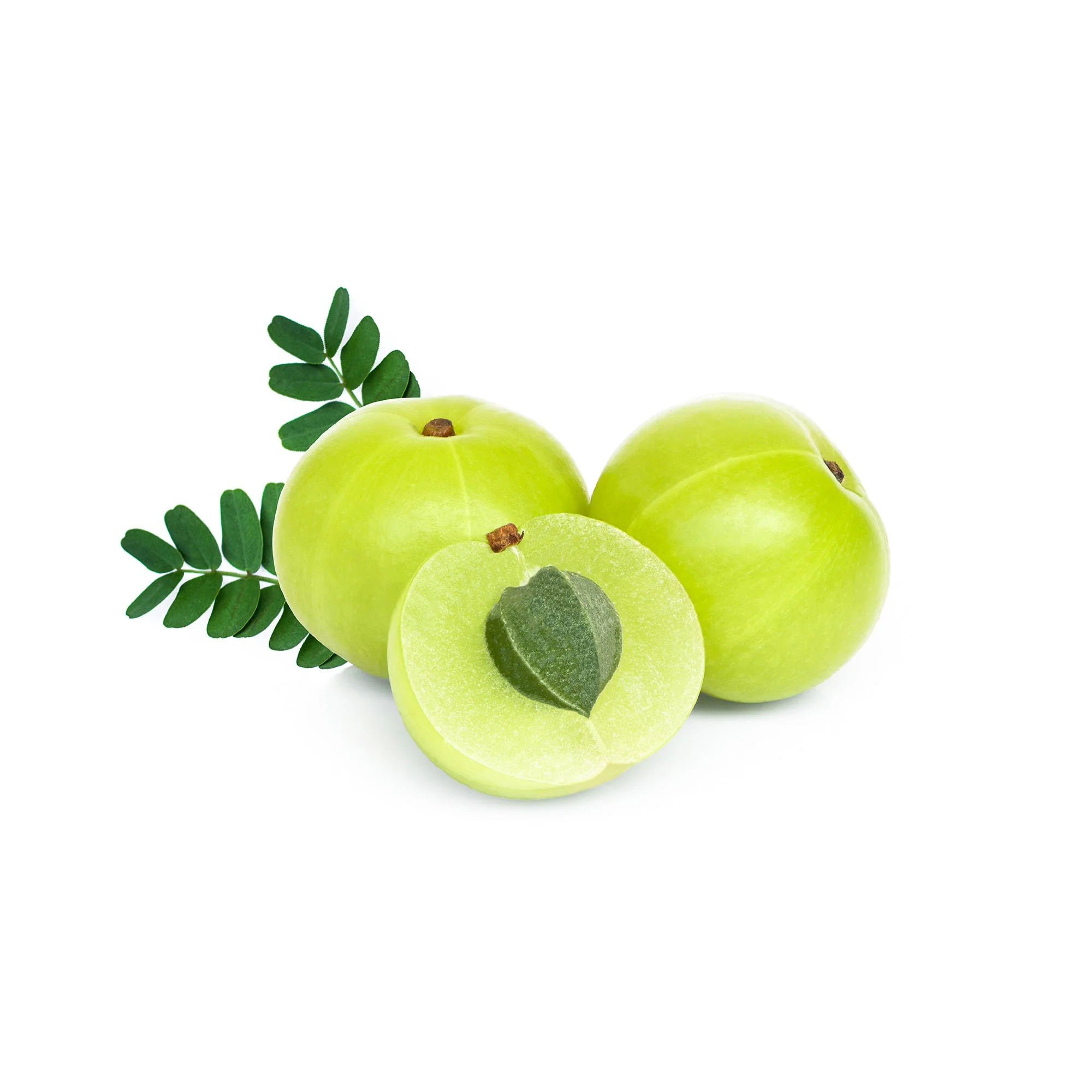
This ancient super-berry, also known as an Indian gooseberry, is thought to have powerful medicinal properties. In fact, in India it’s been named “sarva dosha hara”, meaning remover of all diseases. Despite its varied and potent healing powers, the deliciously sour Amla berry is still largely unknown outside of India. It’s thought to improve liver, kidney, digestive, and heart health, and even increase hair growth.
History
According to Hindu mythology, the Amla berry is said to have come from the first tree to appear on Earth, which manifested from the tears of Brahma - one of the major Hindu gods - while he was meditating.
Regions
The Amla tree is native to India, but can now be found growing in Pakistan, Sri Lanka, Southeast Asia, China, Malaysia, and more.
Flavours & Texture
The Amla berry has a very distinctive and unique flavour, unlike any other fruit. It’s a mixture of a sour, bitter, tangy taste with sweet and aromatic notes. The skin is slightly tough whilst the flesh is crisp and incredibly juicy.
Preparation
You can eat the whole fruit raw, including the skin. We recommend adding it to juices.
Nutritional Value
The Amla berry is an incredible antioxidant and is thought to boost immunity.
|
Calories per 100 g |
48 |
|
Fat |
0.5 |
|
Carbohydrates |
10 |
|
Fibre |
5 |
|
Protein |
1 |
Product Information
Product Information
Shipping & Returns
Shipping & Returns
Description
Origin - India 🇮🇳
Class - CAT 1
Introduction
This ancient super-berry, also known as an Indian gooseberry, is thought to have powerful medicinal properties. In fact, in India it’s been named “sarva dosha hara”, meaning remover of all diseases. Despite its varied and potent healing powers, the deliciously sour Amla berry is still largely unknown outside of India. It’s thought to improve liver, kidney, digestive, and heart health, and even increase hair growth.
History
According to Hindu mythology, the Amla berry is said to have come from the first tree to appear on Earth, which manifested from the tears of Brahma - one of the major Hindu gods - while he was meditating.
Regions
The Amla tree is native to India, but can now be found growing in Pakistan, Sri Lanka, Southeast Asia, China, Malaysia, and more.
Flavours & Texture
The Amla berry has a very distinctive and unique flavour, unlike any other fruit. It’s a mixture of a sour, bitter, tangy taste with sweet and aromatic notes. The skin is slightly tough whilst the flesh is crisp and incredibly juicy.
Preparation
You can eat the whole fruit raw, including the skin. We recommend adding it to juices.
Nutritional Value
The Amla berry is an incredible antioxidant and is thought to boost immunity.
|
Calories per 100 g |
48 |
|
Fat |
0.5 |
|
Carbohydrates |
10 |
|
Fibre |
5 |
|
Protein |
1 |