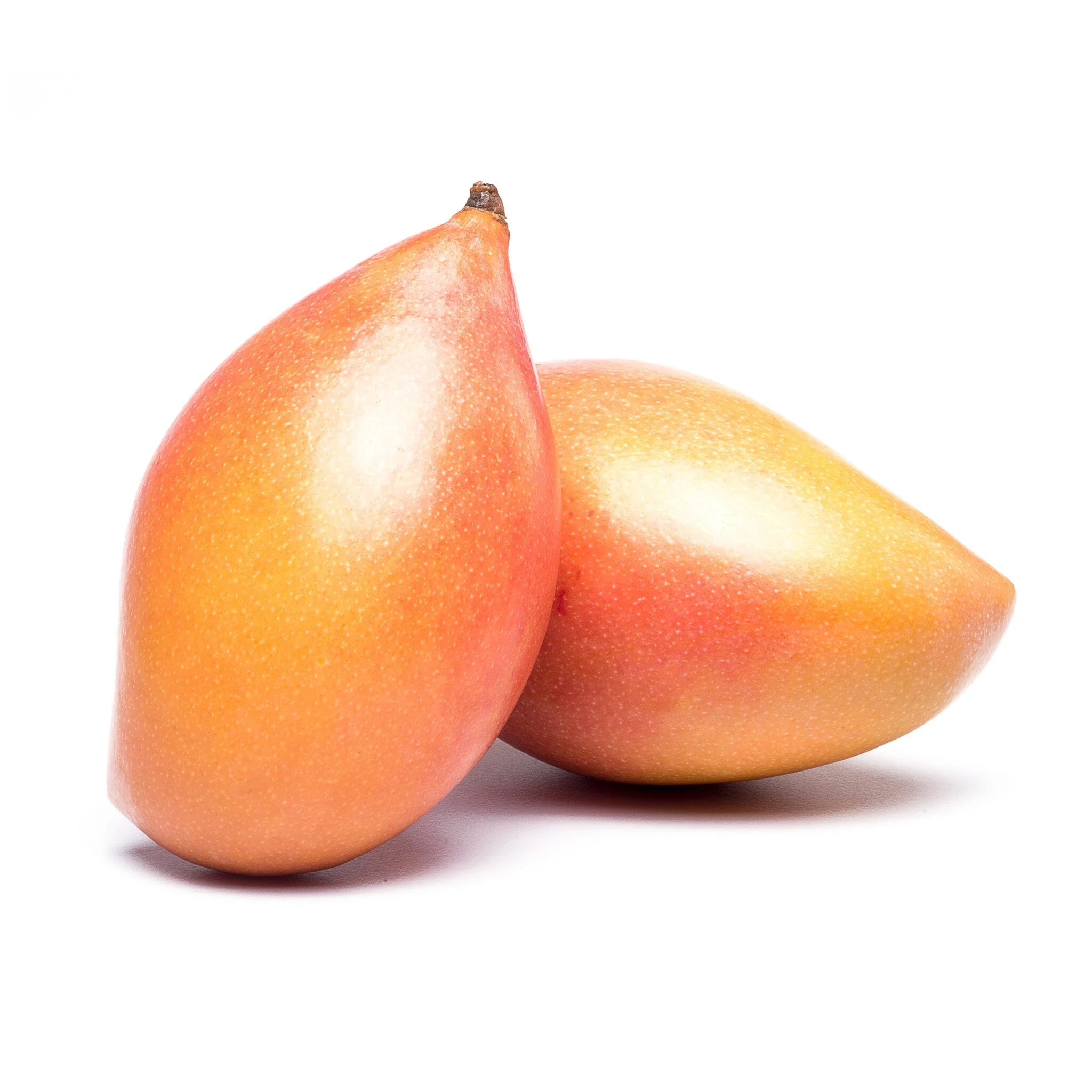
Mango - Espada / Bangalora
Country of Origin - India
Average Weight - 200 Grams per fruit
Introduction
Mango is the fruit of the tropical tree Mangifera indica. Mangoes are tropical fruits and they are regarded as some of the most consumed fruits in the world. The Bangalora, also known as Espada Mango, is a true embodiment of sunshine, boasting a rich history and a flavour profile that's nothing short of heavenly.
History
Bangalora / Espada Mango has a history as vibrant as its flavor. Originally hailing from India, this mango variety is believed to have been cultivated for over 4,000 years. It was highly esteemed by Indian royalty and was even mentioned in ancient Sanskrit literature. Over time, it found its way to Central and South America, where it adapted to different climates and soil conditions while retaining its exceptional taste.
Regions
While its roots trace back to India, today, Bangalora / Espada Mango thrives in tropical regions around the world. You can find this tropical delight in India, where it enjoys a long growing season, as well as in countries like Mexico, Brazil, and the Caribbean. These regions provide the ideal climate for this mango variety to flourish, resulting in fruit that's juicy, aromatic, and incredibly flavorful.
Flavours & Texture
Bangalora / Espada Mango is known for its sweet, succulent flesh that boasts a delightful balance of sugar and acidity. Its flavour profile includes notes of peach, citrus, and a hint of coconut, making it a mouthwatering treat. The texture is silky-smooth with minimal fibres, ensuring each bite is a melt-in-your-mouth experience.
Preparation
Using a sharp knife, slice the mango lengthways on either side of the stone. Score a lattice into the flesh, being careful not to cut through the skin. Gently push out the flesh, slice off the cubes and discard the skin. Cut the remaining flesh from around the stone into cubes and enjoy.
Nutritional Value
Mangoes are low in calories and are a good source of vitamins, fibre, and carbohydrates.
|
Calories per 100g |
65 kcal |
|
Fat |
0.3 g |
|
Carbohydrates |
17 g |
|
Fiber |
1.8 g |
|
Protein |
0.5 g |
|
Iron |
1 % of the RDI |
|
Potassium |
4 % of the RDI |
|
Vitamin C |
46 % of the RDI |
|
Vitamin A |
15 % of the RDI |
Original: $5.03
-65%$5.03
$1.76Product Information
Product Information
Shipping & Returns
Shipping & Returns
Description
Country of Origin - India
Average Weight - 200 Grams per fruit
Introduction
Mango is the fruit of the tropical tree Mangifera indica. Mangoes are tropical fruits and they are regarded as some of the most consumed fruits in the world. The Bangalora, also known as Espada Mango, is a true embodiment of sunshine, boasting a rich history and a flavour profile that's nothing short of heavenly.
History
Bangalora / Espada Mango has a history as vibrant as its flavor. Originally hailing from India, this mango variety is believed to have been cultivated for over 4,000 years. It was highly esteemed by Indian royalty and was even mentioned in ancient Sanskrit literature. Over time, it found its way to Central and South America, where it adapted to different climates and soil conditions while retaining its exceptional taste.
Regions
While its roots trace back to India, today, Bangalora / Espada Mango thrives in tropical regions around the world. You can find this tropical delight in India, where it enjoys a long growing season, as well as in countries like Mexico, Brazil, and the Caribbean. These regions provide the ideal climate for this mango variety to flourish, resulting in fruit that's juicy, aromatic, and incredibly flavorful.
Flavours & Texture
Bangalora / Espada Mango is known for its sweet, succulent flesh that boasts a delightful balance of sugar and acidity. Its flavour profile includes notes of peach, citrus, and a hint of coconut, making it a mouthwatering treat. The texture is silky-smooth with minimal fibres, ensuring each bite is a melt-in-your-mouth experience.
Preparation
Using a sharp knife, slice the mango lengthways on either side of the stone. Score a lattice into the flesh, being careful not to cut through the skin. Gently push out the flesh, slice off the cubes and discard the skin. Cut the remaining flesh from around the stone into cubes and enjoy.
Nutritional Value
Mangoes are low in calories and are a good source of vitamins, fibre, and carbohydrates.
|
Calories per 100g |
65 kcal |
|
Fat |
0.3 g |
|
Carbohydrates |
17 g |
|
Fiber |
1.8 g |
|
Protein |
0.5 g |
|
Iron |
1 % of the RDI |
|
Potassium |
4 % of the RDI |
|
Vitamin C |
46 % of the RDI |
|
Vitamin A |
15 % of the RDI |