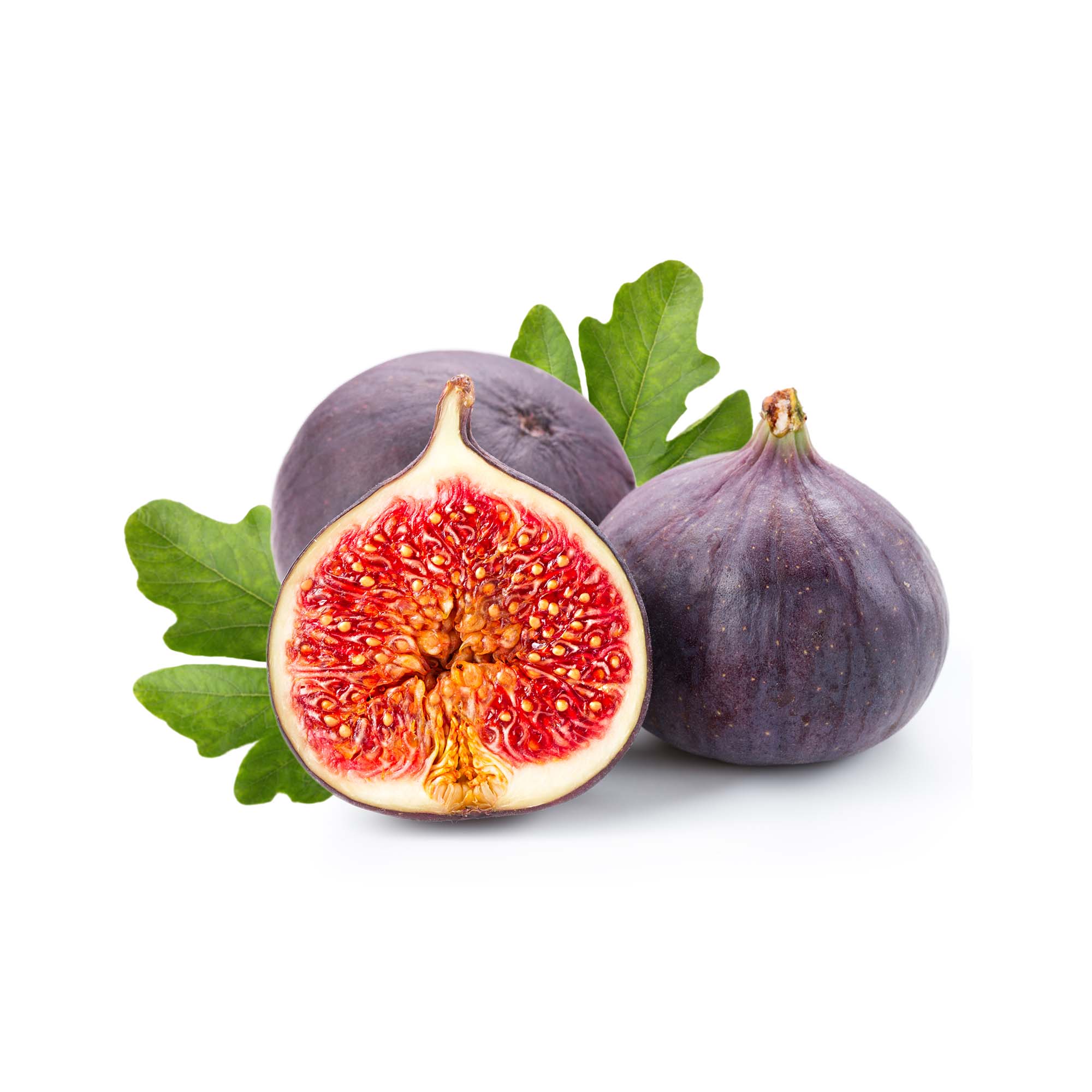
Fig - Brown
Origin - Northern Asia
Average weight - 28 grams per Fig
Introduction
The fig (Ficus carica) is an Asian species of flowering plant in the mulberry family. It is an important commercial crop and native to the Mediterranean and western Asia. The plant can grow up to 7-10 metres tall and its fruit develops as a hollow, fleshy structure that has a seed in the middle of its flesh. The whole fig fruit is 3–5 centimetre long, with a green skin that sometimes ripens toward purple or brown.
History
The fig is believed to be originated in northern Asia Minor and spread with the Greeks and the Romans throughout the Mediterranean region. During the 16th century it was introduced in California and evidence shows that it was in abundance in both China and England by this time as well. Some historians consider it the first of the domesticated crops.
Regions
Nowadays fig is produced by many countries around the world with Turkey being the leading producer. Significant amounts are produced in Egypt, Algeria, Iran, Marocco, Syria, the USA, Brazil, Spain, and Tunisia.
Flavours & Texture
Depending on the variety, the taste of figs resembles three basic flavors: berry, honey, and sugar. The flesh of the fig is jellylike and pulpy, but not juicy and it has a soft texture.
Preparation
Gently wipe the skins with a damp cloth, trim off the stem if it's hard, then either keep whole or cut in half from top to bottom. You can have it raw or you can slice it and add it to a fruit salad.
Nutritional Value
Figs are low in calories and are a good source of fiber, iron, and vitamins.
|
Calories per 100g |
74 kcal |
|
Fat |
0.3 g |
|
Carbohydrates |
19 g |
|
Fiber |
2.9 g |
|
Protein |
0.8 g |
|
Iron |
2.1 % of the RDI |
|
Potassium |
7 % of the RDI |
|
Vitamin C |
3.3 % of the RDI |
|
Vitamin A |
2.8 % of the RDI |
Original: $2.21
-65%$2.21
$0.77Product Information
Product Information
Shipping & Returns
Shipping & Returns
Description
Origin - Northern Asia
Average weight - 28 grams per Fig
Introduction
The fig (Ficus carica) is an Asian species of flowering plant in the mulberry family. It is an important commercial crop and native to the Mediterranean and western Asia. The plant can grow up to 7-10 metres tall and its fruit develops as a hollow, fleshy structure that has a seed in the middle of its flesh. The whole fig fruit is 3–5 centimetre long, with a green skin that sometimes ripens toward purple or brown.
History
The fig is believed to be originated in northern Asia Minor and spread with the Greeks and the Romans throughout the Mediterranean region. During the 16th century it was introduced in California and evidence shows that it was in abundance in both China and England by this time as well. Some historians consider it the first of the domesticated crops.
Regions
Nowadays fig is produced by many countries around the world with Turkey being the leading producer. Significant amounts are produced in Egypt, Algeria, Iran, Marocco, Syria, the USA, Brazil, Spain, and Tunisia.
Flavours & Texture
Depending on the variety, the taste of figs resembles three basic flavors: berry, honey, and sugar. The flesh of the fig is jellylike and pulpy, but not juicy and it has a soft texture.
Preparation
Gently wipe the skins with a damp cloth, trim off the stem if it's hard, then either keep whole or cut in half from top to bottom. You can have it raw or you can slice it and add it to a fruit salad.
Nutritional Value
Figs are low in calories and are a good source of fiber, iron, and vitamins.
|
Calories per 100g |
74 kcal |
|
Fat |
0.3 g |
|
Carbohydrates |
19 g |
|
Fiber |
2.9 g |
|
Protein |
0.8 g |
|
Iron |
2.1 % of the RDI |
|
Potassium |
7 % of the RDI |
|
Vitamin C |
3.3 % of the RDI |
|
Vitamin A |
2.8 % of the RDI |