Passionfruit - Sweet Purple
Origin & History
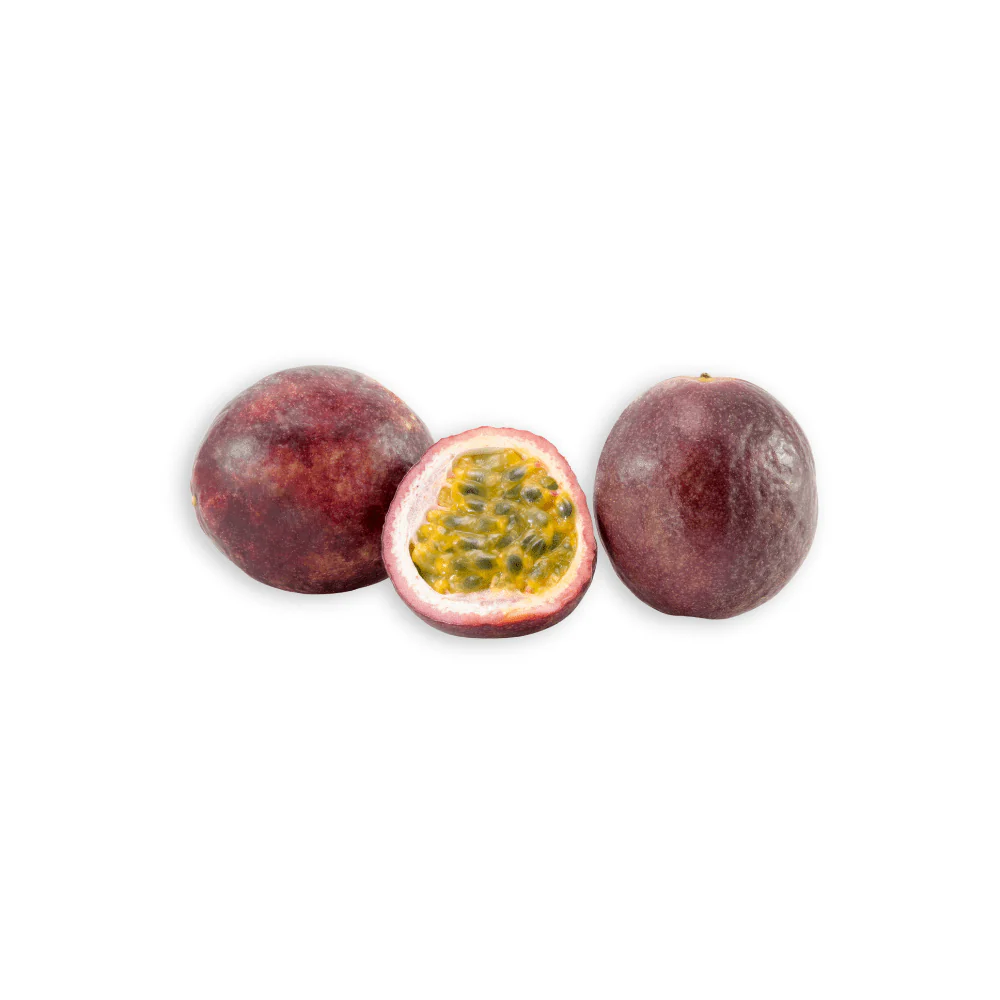
This rare and exquisite variety of passion fruit may look like the traditional purple passion fruit (Passiflora edulis), but it stands out with its extraordinary sweetness. Native to South America, this unique cultivar has been selectively grown for its naturally high sugar content, making it one of the sweetest passion fruits available. Originally enjoyed by indigenous communities, it has now become a prized delicacy in tropical fruit markets worldwide.
Taste & Texture
Unlike the common passion fruit, which has a tangy kick, this sweet variety offers a naturally honeyed, tropical flavor with little to no tartness. Imagine the perfect blend of mango, apricot, and nectar with a floral aroma that enhances its juicy, seed-filled pulp. The seeds add a delightful crunch, making every bite a tropical experience.
Where It’s Grown Today
While traditional passion fruit is cultivated across South America, Africa, and Australia, this particular variety thrives in select tropical regions, including Ecuador, Colombia, and parts of Southeast Asia, where the climate allows it to develop its signature sweetness.
A Close Relative to Classic Passion Fruit
This sweet purple passion fruit belongs to the same Passiflora family as traditional passion fruit but has been cultivated to reduce acidity and maximize natural sugars. It shares the same aromatic pulp and crunchy seeds but offers a much smoother, dessert-like experience.
Nutritional Information (Per 100g of Pulp)
- Calories: ~97 kcal
- Carbohydrates: ~23g
- Sugars: ~11-15g (higher than regular passion fruit)
- Dietary Fiber: ~10g
- Protein: ~2.2g
- Fats: ~0.4g
Key Vitamins & Minerals
-
Vitamin C – Supports immunity and promotes glowing skin
-
Vitamin A – Essential for eye health and immune function
-
Potassium – Helps maintain heart health and hydration
-
Iron & Magnesium – Supports energy production and muscle function
- Antioxidants – Fights inflammation and supports overall wellness
Preparation & How to Enjoy
-
Cut & Scoop – Simply slice the fruit in half and scoop out the sweet, aromatic pulp with a spoon.
-
Juices & Smoothies – Blend with other tropical fruits for a naturally sweet and refreshing drink.
-
Desserts & Yogurts – Use the pulp as a topping for ice cream, yoghurt, or cakes.
- Cocktails & Mocktails – Add a tropical twist to your favourite drinks with its vibrant pulp.
Original: $3.29
-65%$3.29
$1.15Product Information
Product Information
Shipping & Returns
Shipping & Returns
Description
Origin & History
This rare and exquisite variety of passion fruit may look like the traditional purple passion fruit (Passiflora edulis), but it stands out with its extraordinary sweetness. Native to South America, this unique cultivar has been selectively grown for its naturally high sugar content, making it one of the sweetest passion fruits available. Originally enjoyed by indigenous communities, it has now become a prized delicacy in tropical fruit markets worldwide.
Taste & Texture
Unlike the common passion fruit, which has a tangy kick, this sweet variety offers a naturally honeyed, tropical flavor with little to no tartness. Imagine the perfect blend of mango, apricot, and nectar with a floral aroma that enhances its juicy, seed-filled pulp. The seeds add a delightful crunch, making every bite a tropical experience.
Where It’s Grown Today
While traditional passion fruit is cultivated across South America, Africa, and Australia, this particular variety thrives in select tropical regions, including Ecuador, Colombia, and parts of Southeast Asia, where the climate allows it to develop its signature sweetness.
A Close Relative to Classic Passion Fruit
This sweet purple passion fruit belongs to the same Passiflora family as traditional passion fruit but has been cultivated to reduce acidity and maximize natural sugars. It shares the same aromatic pulp and crunchy seeds but offers a much smoother, dessert-like experience.
Nutritional Information (Per 100g of Pulp)
- Calories: ~97 kcal
- Carbohydrates: ~23g
- Sugars: ~11-15g (higher than regular passion fruit)
- Dietary Fiber: ~10g
- Protein: ~2.2g
- Fats: ~0.4g
Key Vitamins & Minerals
-
Vitamin C – Supports immunity and promotes glowing skin
-
Vitamin A – Essential for eye health and immune function
-
Potassium – Helps maintain heart health and hydration
-
Iron & Magnesium – Supports energy production and muscle function
- Antioxidants – Fights inflammation and supports overall wellness
Preparation & How to Enjoy
-
Cut & Scoop – Simply slice the fruit in half and scoop out the sweet, aromatic pulp with a spoon.
-
Juices & Smoothies – Blend with other tropical fruits for a naturally sweet and refreshing drink.
-
Desserts & Yogurts – Use the pulp as a topping for ice cream, yoghurt, or cakes.
- Cocktails & Mocktails – Add a tropical twist to your favourite drinks with its vibrant pulp.