Plum - Black Pearl
Introduction
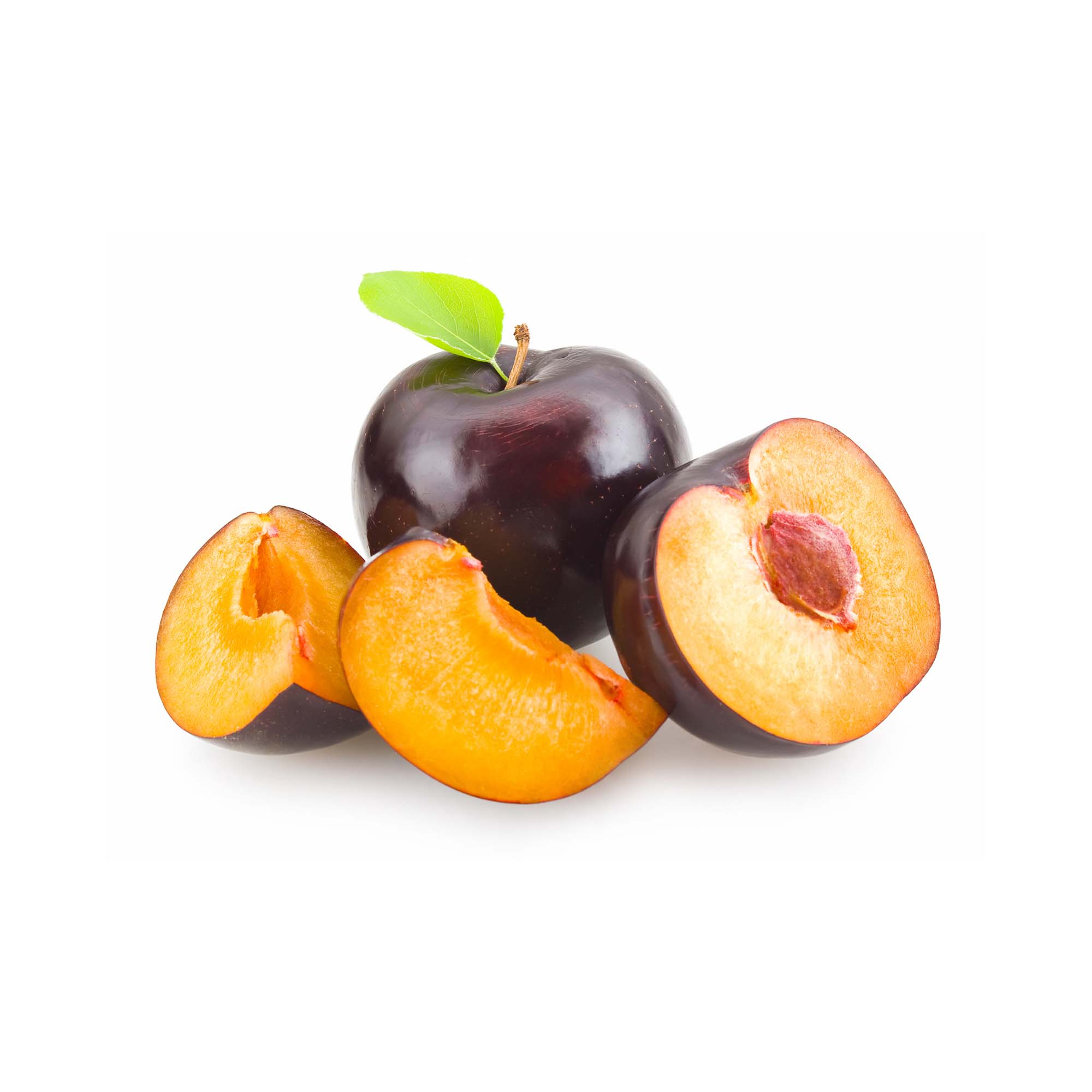
A plum is a fruit of some species in Prunus subg. Prunus. Plums are a diverse group of species. The commercially important plum trees are medium-sized, usually pruned to 5–6 metres in height. Fruits are usually of medium size, between 2–7 centimetres in diameter, globose to oval. The plum is a drupe, meaning its fleshy fruit surrounds a single hard seed.
History
Plums are believed to be amongst the first fruits domesticated by humans. In fact, some of the most abundantly cultivated species are not found in the wild and can be found only around human settlements. It is believed that plums originated in Iran. Over the years they were spread around Asia and were introduced in many European countries. The black pearl variety is believed to be originated from South Africa.
Regions
Plums are cultured in many countries around the world. China is the leading producer, while significant amounts are produced in Romania, the USA, Serbia, Iran, Turkey, Chile, India, Italy, Spain, and France.
Flavours & Texture
The taste of the plum fruit ranges from sweet to tart depending on the variety. The skin itself may be particularly tart. In terms of texture, plums have a soft and firm texture. The black pearl plum is a proprietary plum variety with a rich fruit flavor, like blackberry, balanced by its tart skins.
Preparation
The skin of the plum is safe to eat and provides a sharper flavour than the flesh. You can slice it and remove the seed and use it in your fruit salad. You can also make juice or use it in your smoothies.
Nutritional Value
Plums are low in calories and are a good source of fiber and vitamins.
|
Calories per 100g |
46 kcal |
|
Fat |
0.3 g |
|
Carbohydrates |
11 g |
|
Fiber |
1.4 g |
|
Protein |
0.7 g |
|
Iron |
0.9 % of the RDI |
|
Potassium |
4 % of the RDI |
|
Vitamin C |
16 % of the RDI |
|
Vitamin A |
6.9 % of the RDI |
Original: $1.68
-65%$1.68
$0.59Product Information
Product Information
Shipping & Returns
Shipping & Returns
Description
Introduction
A plum is a fruit of some species in Prunus subg. Prunus. Plums are a diverse group of species. The commercially important plum trees are medium-sized, usually pruned to 5–6 metres in height. Fruits are usually of medium size, between 2–7 centimetres in diameter, globose to oval. The plum is a drupe, meaning its fleshy fruit surrounds a single hard seed.
History
Plums are believed to be amongst the first fruits domesticated by humans. In fact, some of the most abundantly cultivated species are not found in the wild and can be found only around human settlements. It is believed that plums originated in Iran. Over the years they were spread around Asia and were introduced in many European countries. The black pearl variety is believed to be originated from South Africa.
Regions
Plums are cultured in many countries around the world. China is the leading producer, while significant amounts are produced in Romania, the USA, Serbia, Iran, Turkey, Chile, India, Italy, Spain, and France.
Flavours & Texture
The taste of the plum fruit ranges from sweet to tart depending on the variety. The skin itself may be particularly tart. In terms of texture, plums have a soft and firm texture. The black pearl plum is a proprietary plum variety with a rich fruit flavor, like blackberry, balanced by its tart skins.
Preparation
The skin of the plum is safe to eat and provides a sharper flavour than the flesh. You can slice it and remove the seed and use it in your fruit salad. You can also make juice or use it in your smoothies.
Nutritional Value
Plums are low in calories and are a good source of fiber and vitamins.
|
Calories per 100g |
46 kcal |
|
Fat |
0.3 g |
|
Carbohydrates |
11 g |
|
Fiber |
1.4 g |
|
Protein |
0.7 g |
|
Iron |
0.9 % of the RDI |
|
Potassium |
4 % of the RDI |
|
Vitamin C |
16 % of the RDI |
|
Vitamin A |
6.9 % of the RDI |