Plum - Red Beauty
Country of Origin: Japan 🇯🇵
Introduction
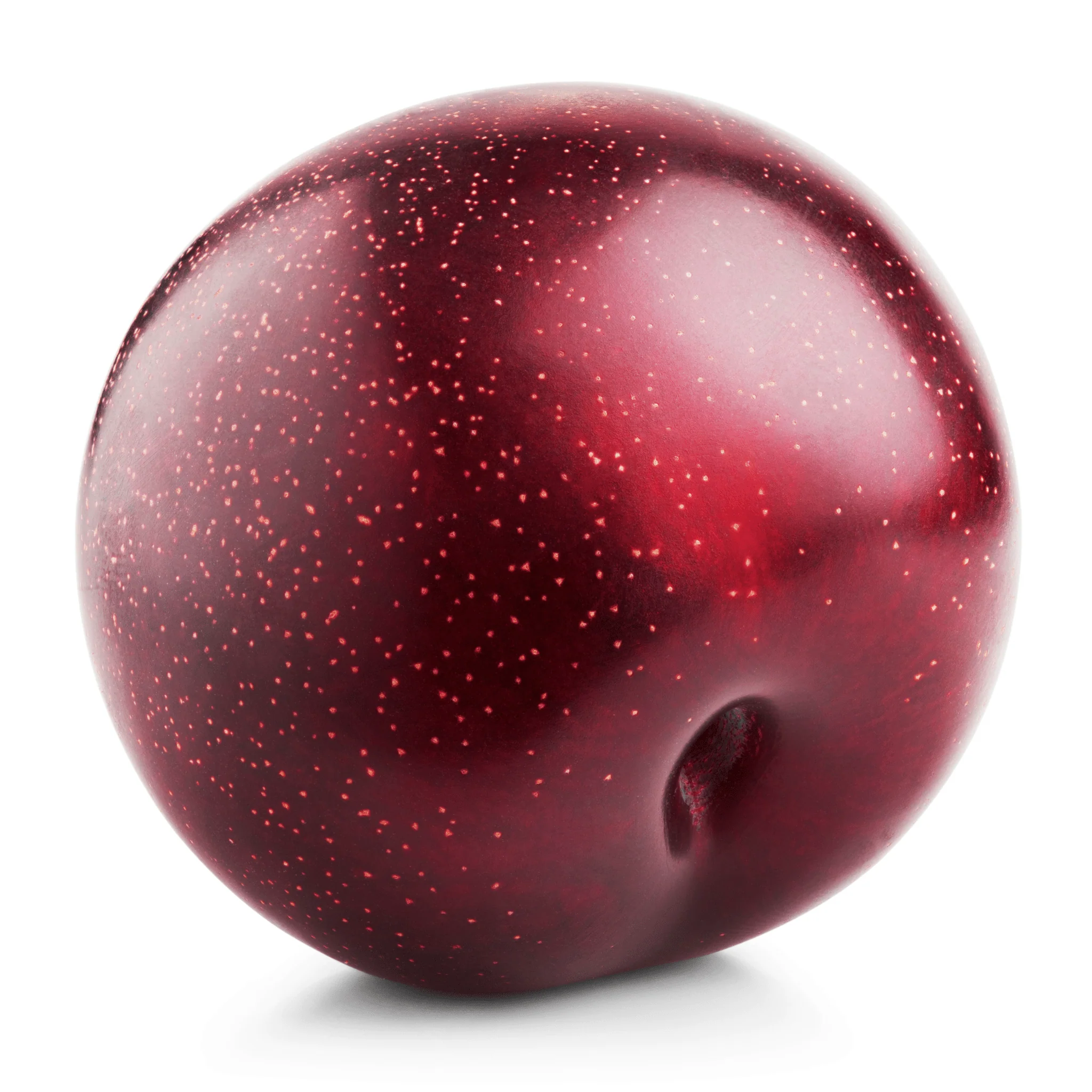
The Red Beauty plum is an early-ripening Japanese plum variety celebrated for its bright red to reddish-purple skin and juicy, yellow flesh. This medium-sized, round fruit offers a mild sweet-tart flavour, making it ideal for fresh eating, baking, or preserving. Self-fertile and requiring low chill hours (250–300), it thrives in warm climates like the Mediterranean and coastal regions, producing reliable yields and adding ornamental appeal with its spring blossoms.
History
The Red Beauty plum, part of the Japanese plum group, was developed in California to suit warm climates with minimal chill requirements. Introduced to meet the demand for early-season plums, it has become popular in regions like Spain’s Ribera Alta and Murcia, where hot temperatures support its growth. Its cultivation has expanded to Mediterranean coastal areas and other warm regions, valued for its early market availability and adaptability.
Regions
Originating in California, the Red Beauty plum is well-suited to warm, Mediterranean-like climates, particularly in Spain’s Ribera Alta and Murcia regions. It is now grown in coastal areas of the Mediterranean, including Italy and Greece, as well as in New Zealand, where it adapts well to local conditions. In the U.S., it thrives in USDA zones 4–10, especially in California’s San Joaquin Valley, a major plum-producing region.
Flavours & Texture
Red Beauty plums have a mild, sweet-tart flavour with a juicy, firm yellow flesh that contrasts with their smooth, bright red to wine-coloured skin. The texture is crisp yet tender, with a hard, meaty consistency that holds up well in both fresh and cooked applications. Their balanced taste and appealing juiciness make them a favourite for snacking or culinary uses.
How to Prepare
Wash Red Beauty plums thoroughly and enjoy fresh, removing the pit for easy eating. For cooking, halve and pit them for use in jams, jellies, or sauces, or grill to caramelise their sugars for a summer dessert. They can be sliced into salads, paired with fresh cheese or nuts as an appetiser, or baked into pies and tarts. Store unripe plums at room temperature to ripen, then refrigerate to maintain freshness.
Nutritional Values
Red Beauty plums are a moderate source of vitamin C for immune support and vitamin A for eye health, with fibre aiding digestion. Their red skin likely contributes antioxidants like anthocyanins. Values are approximate and based on standard Japanese plum profiles.
| Nutrient | Value per 100g | % Daily Value (DV) |
|---|---|---|
| Calories | 46 kcal | 2% |
| Carbohydrates | 11.4 g | 4% |
| Sugars | 9.9 g | - |
| Dietary Fiber | 1.4 g | 5% |
| Protein | 0.7 g | 1% |
| Fat | 0.3 g | <1% |
| Vitamin C | 9.5 mg | 11% |
| Vitamin A | 345 IU | 7% |
| Potassium | 157 mg | 3% |
Original: $1.14
-65%$1.14
$0.40Product Information
Product Information
Shipping & Returns
Shipping & Returns
Description
Country of Origin: Japan 🇯🇵
Introduction
The Red Beauty plum is an early-ripening Japanese plum variety celebrated for its bright red to reddish-purple skin and juicy, yellow flesh. This medium-sized, round fruit offers a mild sweet-tart flavour, making it ideal for fresh eating, baking, or preserving. Self-fertile and requiring low chill hours (250–300), it thrives in warm climates like the Mediterranean and coastal regions, producing reliable yields and adding ornamental appeal with its spring blossoms.
History
The Red Beauty plum, part of the Japanese plum group, was developed in California to suit warm climates with minimal chill requirements. Introduced to meet the demand for early-season plums, it has become popular in regions like Spain’s Ribera Alta and Murcia, where hot temperatures support its growth. Its cultivation has expanded to Mediterranean coastal areas and other warm regions, valued for its early market availability and adaptability.
Regions
Originating in California, the Red Beauty plum is well-suited to warm, Mediterranean-like climates, particularly in Spain’s Ribera Alta and Murcia regions. It is now grown in coastal areas of the Mediterranean, including Italy and Greece, as well as in New Zealand, where it adapts well to local conditions. In the U.S., it thrives in USDA zones 4–10, especially in California’s San Joaquin Valley, a major plum-producing region.
Flavours & Texture
Red Beauty plums have a mild, sweet-tart flavour with a juicy, firm yellow flesh that contrasts with their smooth, bright red to wine-coloured skin. The texture is crisp yet tender, with a hard, meaty consistency that holds up well in both fresh and cooked applications. Their balanced taste and appealing juiciness make them a favourite for snacking or culinary uses.
How to Prepare
Wash Red Beauty plums thoroughly and enjoy fresh, removing the pit for easy eating. For cooking, halve and pit them for use in jams, jellies, or sauces, or grill to caramelise their sugars for a summer dessert. They can be sliced into salads, paired with fresh cheese or nuts as an appetiser, or baked into pies and tarts. Store unripe plums at room temperature to ripen, then refrigerate to maintain freshness.
Nutritional Values
Red Beauty plums are a moderate source of vitamin C for immune support and vitamin A for eye health, with fibre aiding digestion. Their red skin likely contributes antioxidants like anthocyanins. Values are approximate and based on standard Japanese plum profiles.
| Nutrient | Value per 100g | % Daily Value (DV) |
|---|---|---|
| Calories | 46 kcal | 2% |
| Carbohydrates | 11.4 g | 4% |
| Sugars | 9.9 g | - |
| Dietary Fiber | 1.4 g | 5% |
| Protein | 0.7 g | 1% |
| Fat | 0.3 g | <1% |
| Vitamin C | 9.5 mg | 11% |
| Vitamin A | 345 IU | 7% |
| Potassium | 157 mg | 3% |