Soursop
Introduction
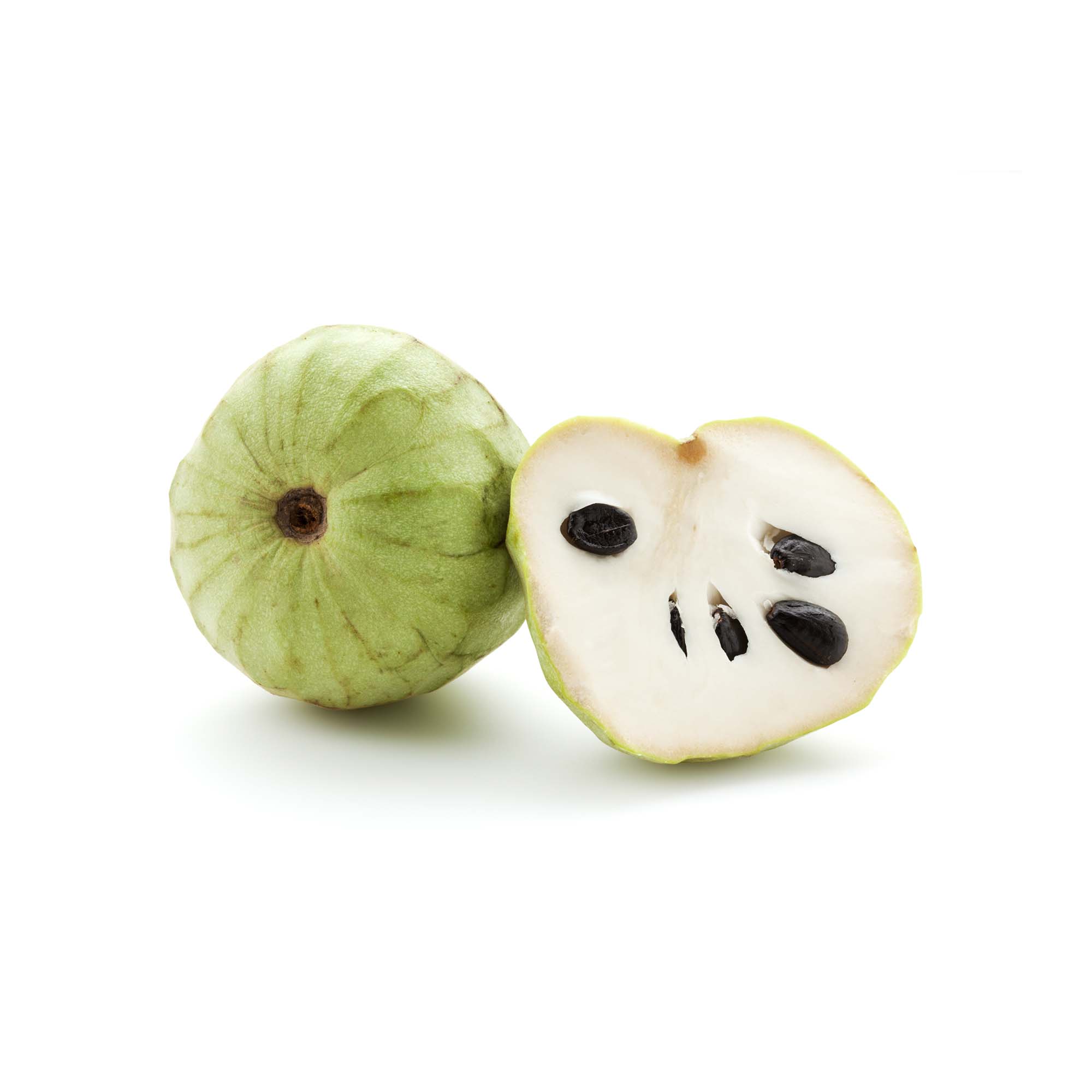
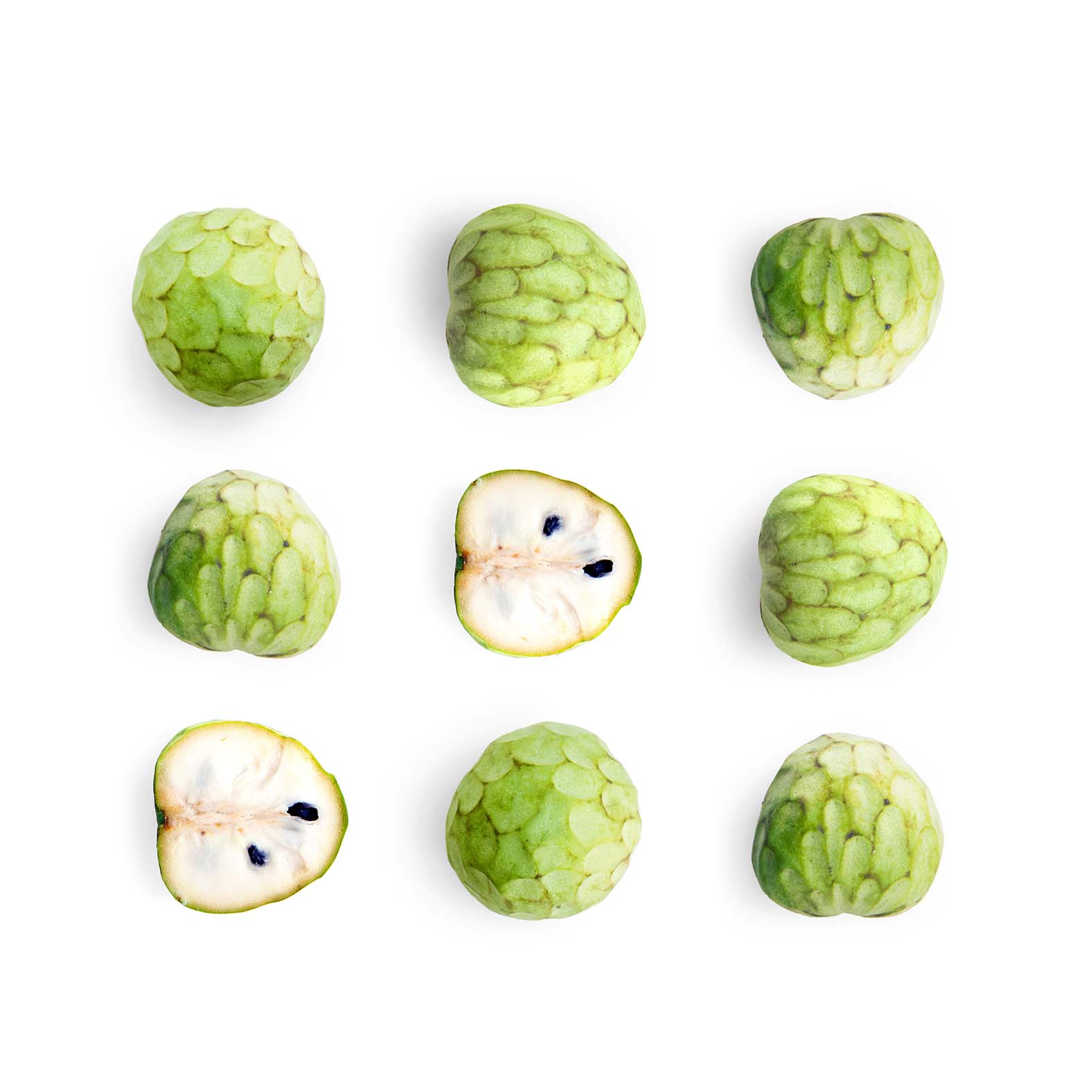
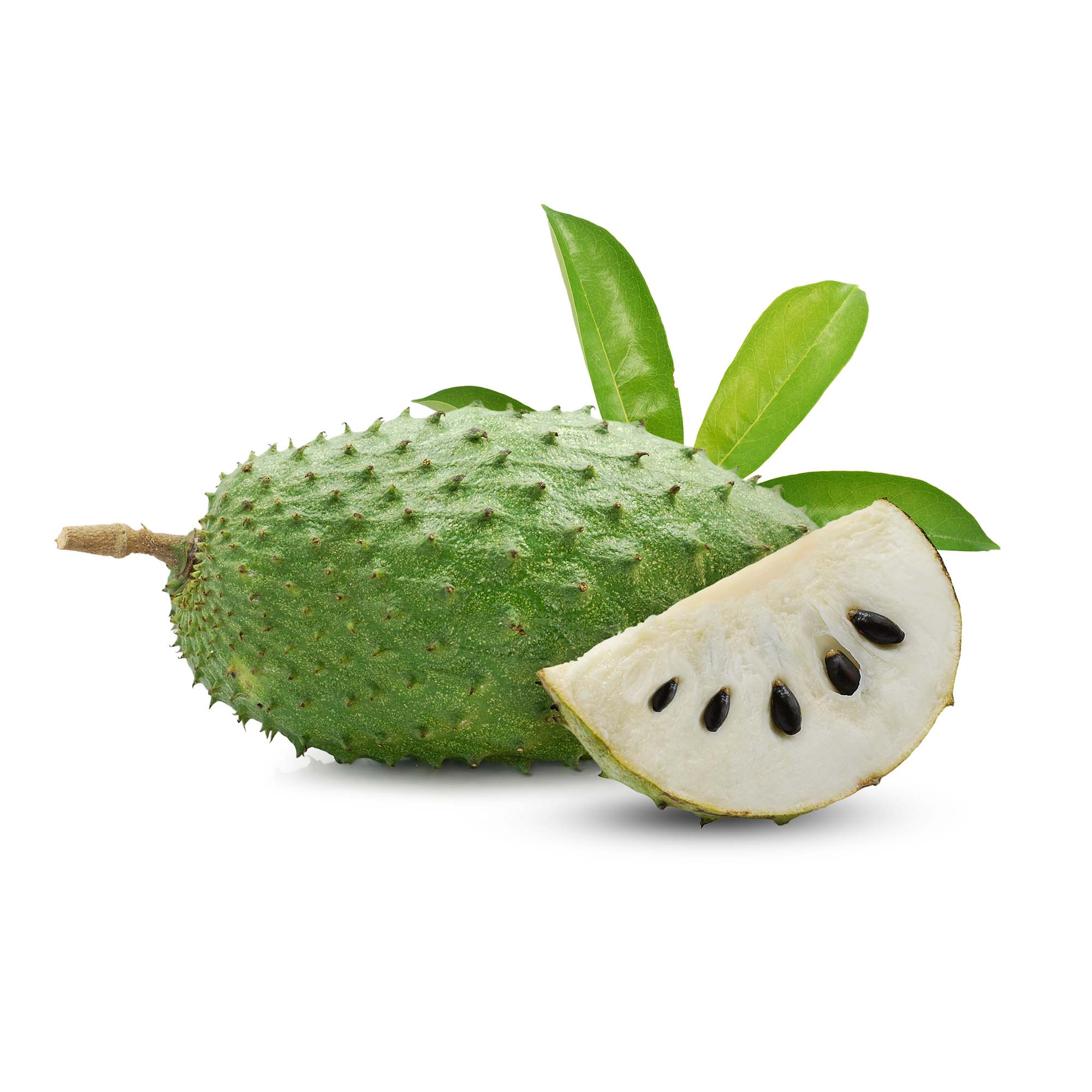
Soursop (Annona muricata) is the fruit of a broadleaf, flowering, evergreen tree. The tree is native to the tropical regions of the Americas. Its fruits range in size and can be quite large as they can grow up to 8 inches and can weigh up to 10 pounds.
History
Its exact origination is not known but it is believed that has been cultivated in South America and Africa for thousands of years. It has been also introduced in certain regions of Asia and nowadays it is widely cultivated in Florida and in tropics.
Regions
It can be found in many different areas around the globe, especially in tropics. In terms of its production, major producers are South American countries and particularly Brazil, Venezuela, and Colombia.
Flavours & Texture
Soursop has a strong flavour that is often compared to pineapple or strawberry. Its taste has been described as a combination of strawberries and apple with sour citrus flavour notes. It has a thick creamy texture reminiscent of banana.
Preparation
Peel the fruit and then cut it in half. Remove the seeds and then scoop out the flesh. You can eat it raw, in a fruit salad or you make juice or smoothies.
Nutritional Value
Soursop has a low caloric amount, is low in sodium and very low in fat. It is also a good source of fibre and potassium.
We do not recommend storing Soursop in the refrigerator as this will likely cause the fruit to spoil.
|
Calories per 100 g |
66 kcal |
|
Fat |
0.3 g |
|
Carbohydrate |
17 g |
|
Fibre |
3.3 g |
|
Protein |
1 g |
|
Sodium |
14 mg |
|
Calcium |
14 mg |
|
Iron |
0.6 mg |
|
Potassium |
278 mg |
Original: $18.72
-65%$18.72
$6.55Product Information
Product Information
Shipping & Returns
Shipping & Returns
Description
Introduction
Soursop (Annona muricata) is the fruit of a broadleaf, flowering, evergreen tree. The tree is native to the tropical regions of the Americas. Its fruits range in size and can be quite large as they can grow up to 8 inches and can weigh up to 10 pounds.
History
Its exact origination is not known but it is believed that has been cultivated in South America and Africa for thousands of years. It has been also introduced in certain regions of Asia and nowadays it is widely cultivated in Florida and in tropics.
Regions
It can be found in many different areas around the globe, especially in tropics. In terms of its production, major producers are South American countries and particularly Brazil, Venezuela, and Colombia.
Flavours & Texture
Soursop has a strong flavour that is often compared to pineapple or strawberry. Its taste has been described as a combination of strawberries and apple with sour citrus flavour notes. It has a thick creamy texture reminiscent of banana.
Preparation
Peel the fruit and then cut it in half. Remove the seeds and then scoop out the flesh. You can eat it raw, in a fruit salad or you make juice or smoothies.
Nutritional Value
Soursop has a low caloric amount, is low in sodium and very low in fat. It is also a good source of fibre and potassium.
We do not recommend storing Soursop in the refrigerator as this will likely cause the fruit to spoil.
|
Calories per 100 g |
66 kcal |
|
Fat |
0.3 g |
|
Carbohydrate |
17 g |
|
Fibre |
3.3 g |
|
Protein |
1 g |
|
Sodium |
14 mg |
|
Calcium |
14 mg |
|
Iron |
0.6 mg |
|
Potassium |
278 mg |